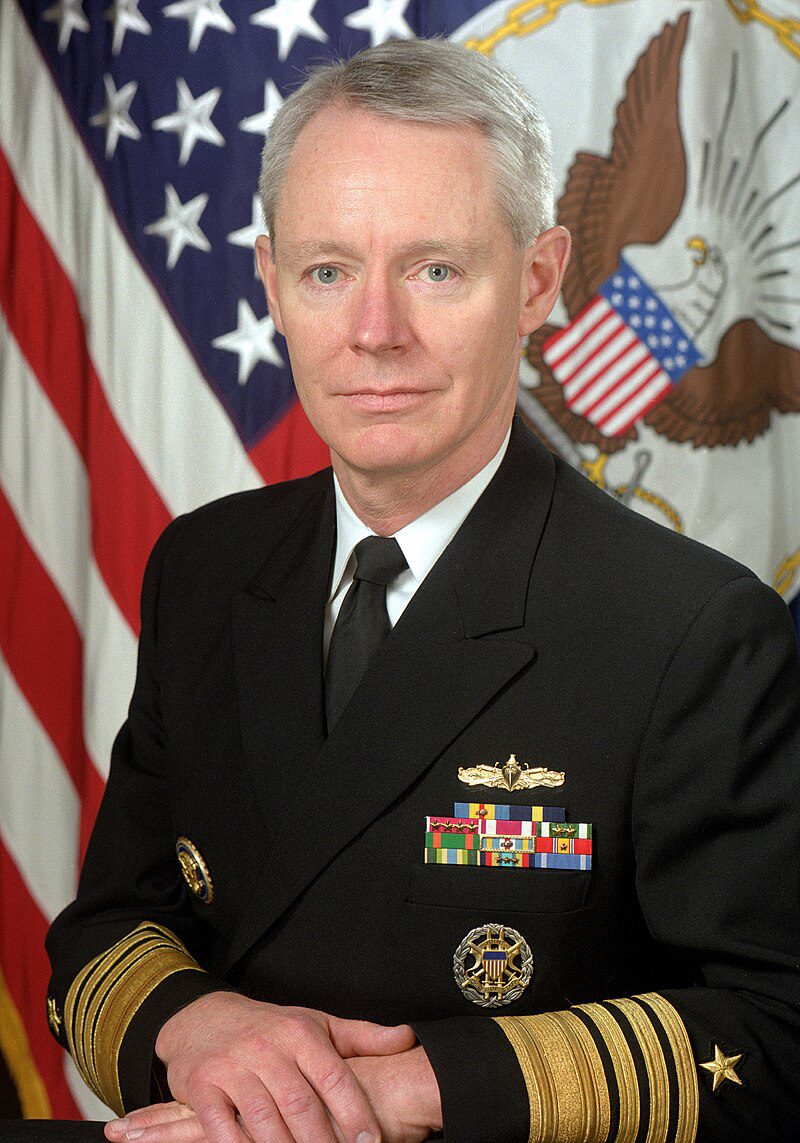

The U.S. Navy stands as a crucial pillar of American military strength and a significant factor in global and regional political stability. While China’s Navy may field a more advanced light fleet, the U.S. maintains a clear edge in the number of aircraft carriers and nuclear submarines. The highest senior officer rank in the Navy, Coast Guard, and the U.S. Public Health Service Commissioned Corps in peacetime is the four-star admiral. This esteemed position was once held by Queens native, Donald L. Pilling. Read on for more details about his life and career on queensyes.com.
Education and Naval Service
Donald L. Pilling was born in Queens on June 4, 1943. He graduated from the U.S. Naval Academy in 1965, where he was one of the institution’s first recipients of the Trident Scholar Program. This program offers high-achieving midshipmen the opportunity to conduct independent research during their final year. Pilling’s research focused on the abstractions of partially ordered systems, which he studied under the guidance of his mentor and friend, Professor James Abbott.
At sea, Pilling served as a commanding officer on destroyers—multi-mission warships designed to hunt submarines, destroy surface vessels, and engage aircraft. These versatile ships are also used for escorting convoys, mining, and providing reconnaissance, patrol duty, and fire support for amphibious landings. Pilling commanded the USS Dahlgren (DDG-43) and the aircraft carrier USS Saratoga (CV/CVA/CVB-60). He also led Destroyer Squadron 26, Cruiser-Destroyer Group 12, the Sixth Fleet (responsible for adjacent Atlantic waters), and Naval Striking and Support Forces Southern Europe.
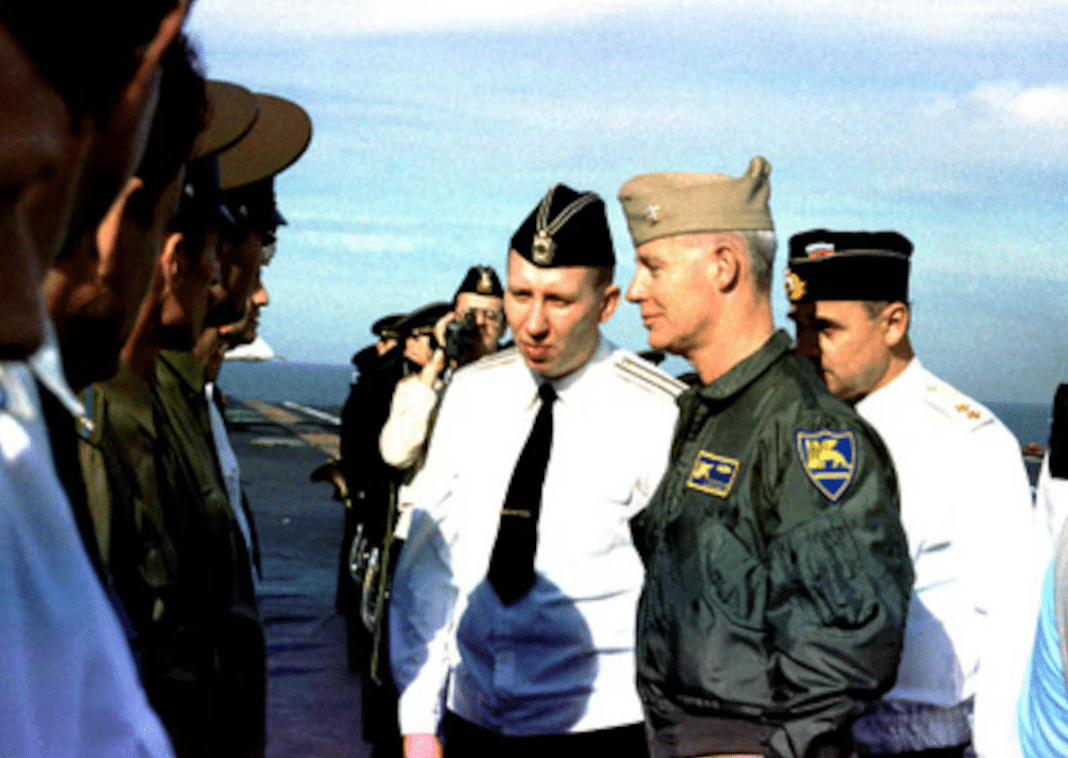
On shore, the admiral undertook various defense and planning assignments. From 1973 to 1977, he worked in the Office of the Secretary of Defense, analyzing resources for U.S. and foreign tactical aircraft and missile programs. Between 1980 and 1983, the Queens native served on the Staff of the Chief of Naval Operations (CNO), where he monitored international trends and their potential impact on the Navy.
From 1985 to 1986, Pilling was a Federal Executive Fellow at the Brookings Institution, a prominent U.S. national think tank that studies public policy in areas like economics, politics, and national security. There, he focused on military procurement and national security issues. Following that, from 1986 to 1988, Pilling was instrumental in developing the Navy’s 5-Year Defense Plan while working in the CNO’s office.
The admiral’s distinguished shore duty continued from 1989 to 1992 at the National Security Council. From 1993 to 1995, he served as Director of Programming on the CNO’s staff. He then spent two years as the Deputy Chief of Naval Operations for Resources, Warfare Requirements, and Assessments. In 1997, Pilling achieved the four-star rank of Admiral, becoming the 30th Vice Chief of Naval Operations (VCNO) of the U.S. Navy before retiring three years later.
Post-Military Career
In 2002, Donald Pilling took the helm of the Logistics Management Institute (LMI), a government-focused firm that provides innovative technical and consulting services to federal agencies. Under his leadership, the company experienced significant growth. The New Yorker implemented several important programs, including backup childcare and eldercare, and expanded parental leave.
The former serviceman also served on the Defense Science Board, the Council on Foreign Relations, and the White House Fellows Commission. Pilling was also part of the boards of trustees and advisors for the Naval War College, the Johns Hopkins University Applied Physics Laboratory, and the National Defense Industrial Association. The highly decorated admiral passed away in 2008 from cancer of the blood and bone marrow.