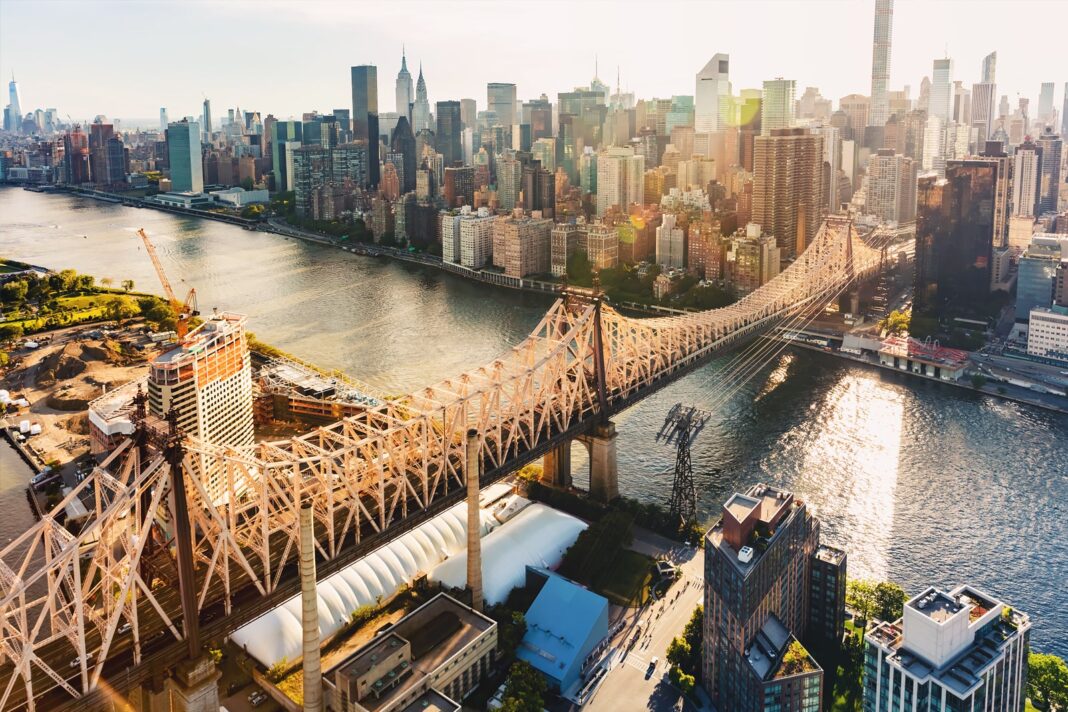

Queens is New York City’s largest borough by area and boasts the most ethnically diverse population in the United States. Home to over two million residents, Queens ranks as the second most populated of New York City’s five boroughs. It is a vibrant mosaic of dozens of unique neighborhoods, each with its distinct identity. Read more on queensyes.com.
From Early Settlers to Borough Status
The first settlers of Queens were the Lenape (Delaware) people, a Native American tribe who traditionally engaged in hunting, fishing, and farming. They spoke various dialects rather than a single language. In the 1600s, they settled in the area now known as Queens, which was then called Newtown.
In 1683, the British annexed Newtown, making it part of New York Province. They established Queens County, named after Queen Catherine of Braganza, wife of England’s King Charles II. The area remained largely rural until the 1800s.
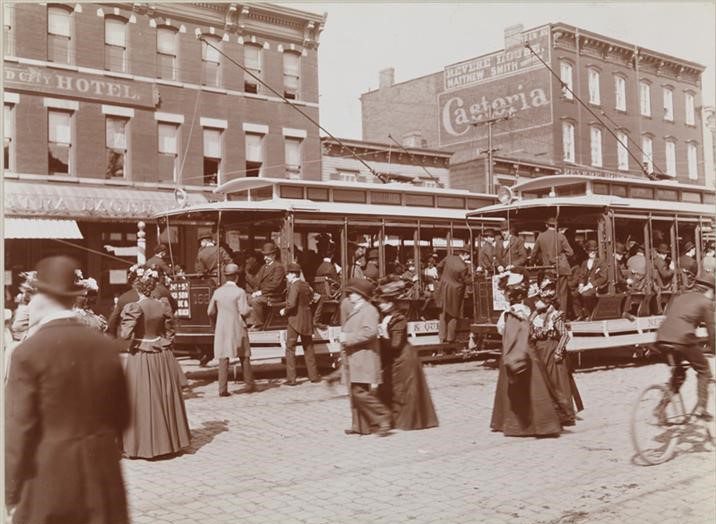
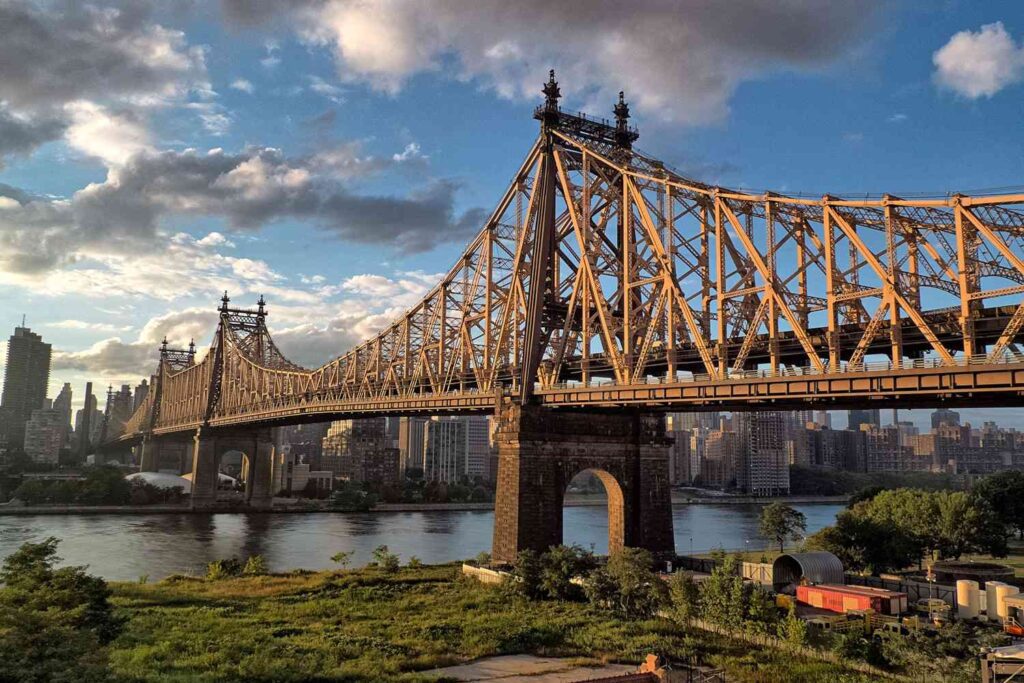
Following New York City’s consolidation in 1898, Queens became one of its five boroughs, while also serving as a New York State county. The opening of the Queensboro Bridge in 1909 spurred further development. During the 1920s and 1930s, many residential buildings in Art Deco and modern styles were constructed.
Population Growth
In the 1940s and 1950s, Queens experienced a demographic boom as families moved to the borough for a suburban lifestyle. Another immigration wave followed in the 1960s and 1970s, with people arriving en masse from Asia and Latin America. This greatly increased the borough’s diversity.
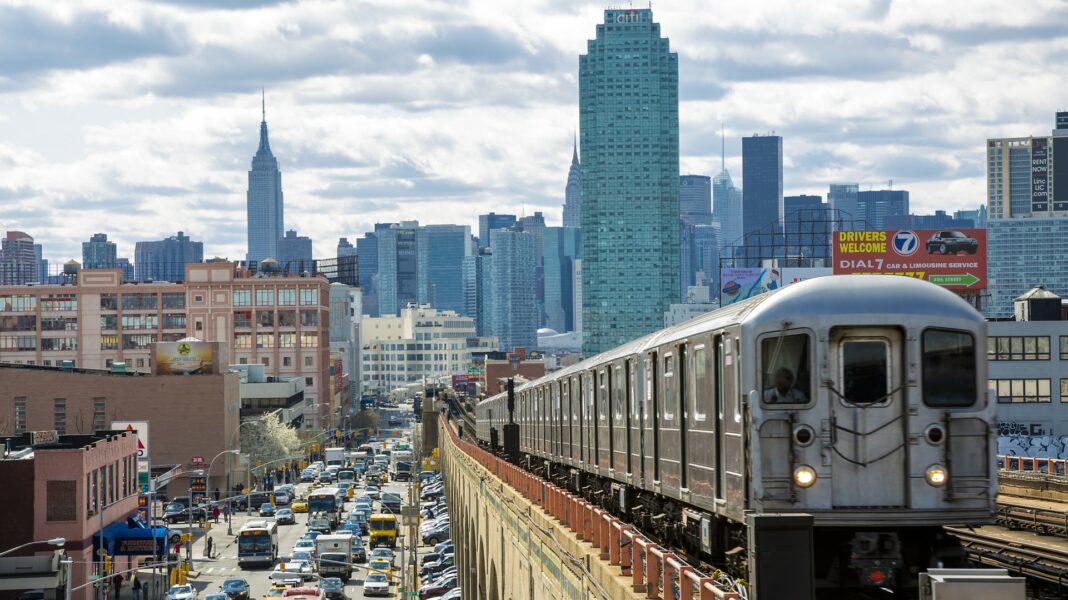
Queens residents represent cultures from almost every corner of the world, speaking over 130 languages and originating from more than 120 countries. The largest groups are from the Dominican Republic, China, Jamaica, and India. With such a range of languages and cultures, it’s no surprise that the 7 train is called the “International Express”!
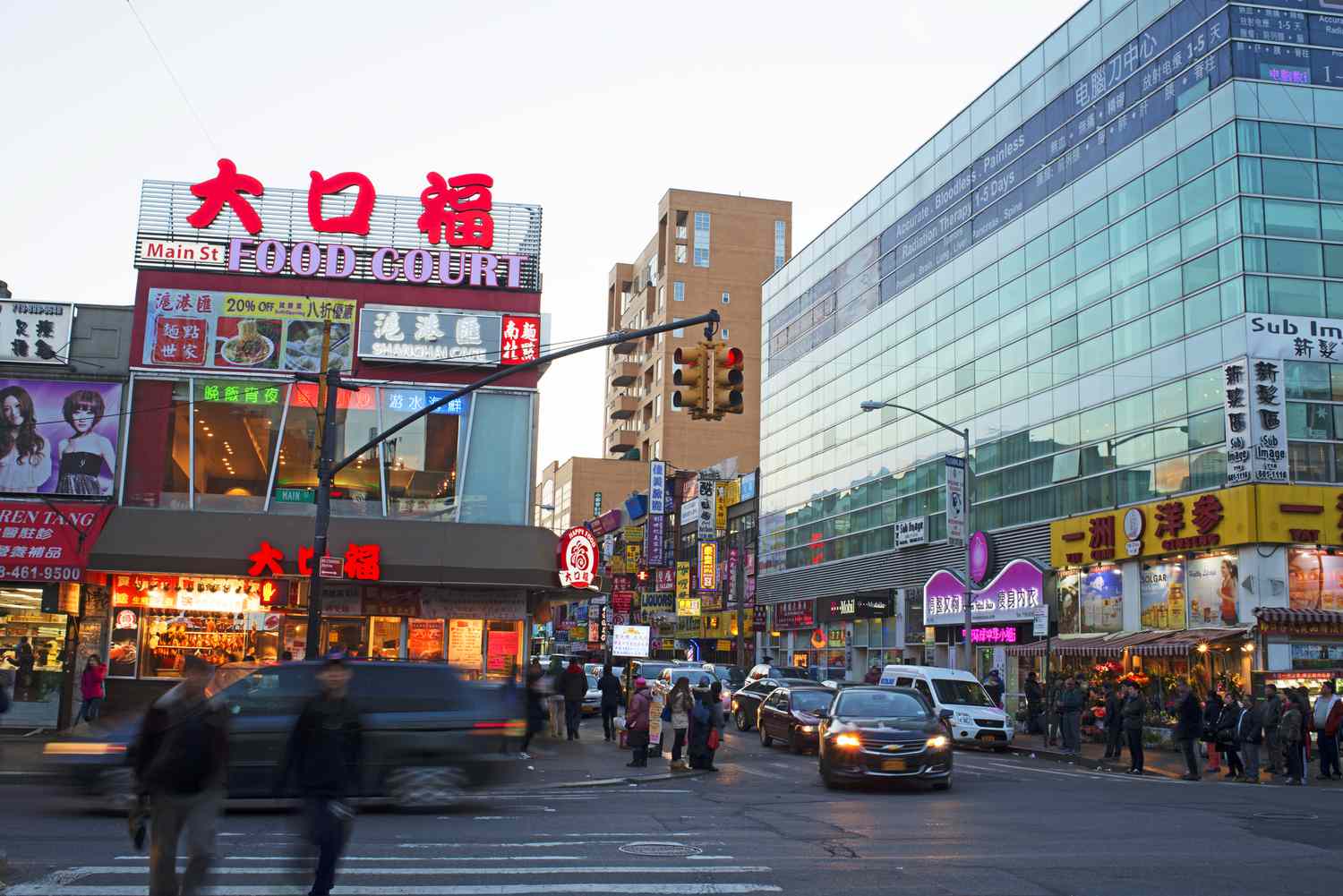
This diversity also brings a vast array of culinary options. The neighborhood of Astoria is known for Greek cuisine, Jackson Heights for South Asian food, and Flushing for authentic Chinese dishes, even larger than Manhattan’s Chinatown. Notably, Queens’ Chinatown offers not only Chinese delicacies but also Korean and Japanese specialties.
Geographically Advantageous Location
Queens is the easternmost and largest borough of New York City by area. Geographically, it borders Brooklyn to the west. The East River lies to the north, Jamaica Bay to the east, and the Atlantic Ocean to the southeast. Although both Queens and Brooklyn are on Long Island, they are so integrally connected to New York City that they are seldom associated with Long Island. The Rockaway Peninsula, the southernmost point of all Long Island, lies between Jamaica Bay and the Atlantic Ocean.
What Is Queens Known For?
Queens is an essential economic hub in New York City, with the second-largest and most diversified economy among the boroughs. Jobs are distributed relatively evenly across healthcare, retail, manufacturing, construction, transportation, and film and television production. The borough is home to John F. Kennedy International Airport, the busiest international airport in the U.S., as well as LaGuardia Airport.
Queens is predominantly residential, though manufacturing and storage facilities are concentrated around Long Island City, with warehousing and transportation centers along the East River. The borough houses branches of the City University of New York and the main campus of St. John’s University.
Citi Field, home to the New York Mets baseball team, often hosts concerts and cultural events. The U.S. Open tennis championship takes place annually at Flushing Meadows–Corona Park, which is open year-round and features 22 indoor and 11 outdoor tennis courts.
Queens Zoo was the first in the U.S. to house animals in naturalistic environments rather than cages. Other popular attractions include the Museum of the Moving Image, Socrates Sculpture Park, Queens Botanical Garden, and the New York Hall of Science.
7 Interesting Facts
- Machpelah Cemetery in Queens is the final resting place of famed magician Harry Houdini. Although the cemetery is semi-ruined and long forgotten, his grave becomes a Halloween pilgrimage spot for magic enthusiasts. Houdini, an American illusionist and escape artist, amazed audiences with his escapes from various restraints. When he died from a burst appendix in 1926, it proved that no one, not even a magician, could escape death.
- More than 5 million people are buried in Queens, more than twice the number of its living residents. By the early 1800s, Manhattan ran out of burial space, prompting shallow mass graves. In 1852, New York State banned any new burials on Manhattan. The uneven, rocky land along the Queens-Brooklyn border was allocated for burials, as it was unsuitable for farming or building.
- Hog Island, near Rockaway Beach, disappeared during Hurricane Sandy. Hog Island was once home to many resorts and bathhouses. On October 29–30, 2012, the powerful storm paralyzed the U.S. East Coast, causing irreversible damage to central Atlantic and northeastern states, Canada, Jamaica, Cuba, Haiti, the Dominican Republic, and the Bahamas.
- Some of the world’s best pianos and grand pianos are crafted in Astoria. Despite New York’s high taxes and property costs, Steinway & Sons continues producing high-quality instruments here. This company was founded in March 1853 by Heinrich Engelhard Steinweg, a German immigrant.
- An abandoned Civil War-era fort is hidden in a Queens public park. Fort Totten spans nearly 100 acres but never saw battle, serving instead as a federal base from the Civil War era to the 1980s. Now owned by the New York City government, the fort hosts military drills, and visitors can explore this unique tourist attraction.
- Queens is home to the first-ever highway built exclusively for cars. In 1908, automobiles were still a novelty, sharing busy roads with horses, wagons, and crowds. Queens responded by opening Long Island Motor Parkway, the world’s first highway for cars.
- The American rock band Ramones held their first rehearsals at an art gallery on Queens Blvd. They began their journey to fame right here in Queens. The Ramones’ music reacted against the increasingly refined and nontraditional hard rock and progressive rock of popular music. Other famous musicians, such as 50 Cent, Tony Bennett, John Williams, and Cyndi Lauper, have also lived and created music in Queens.