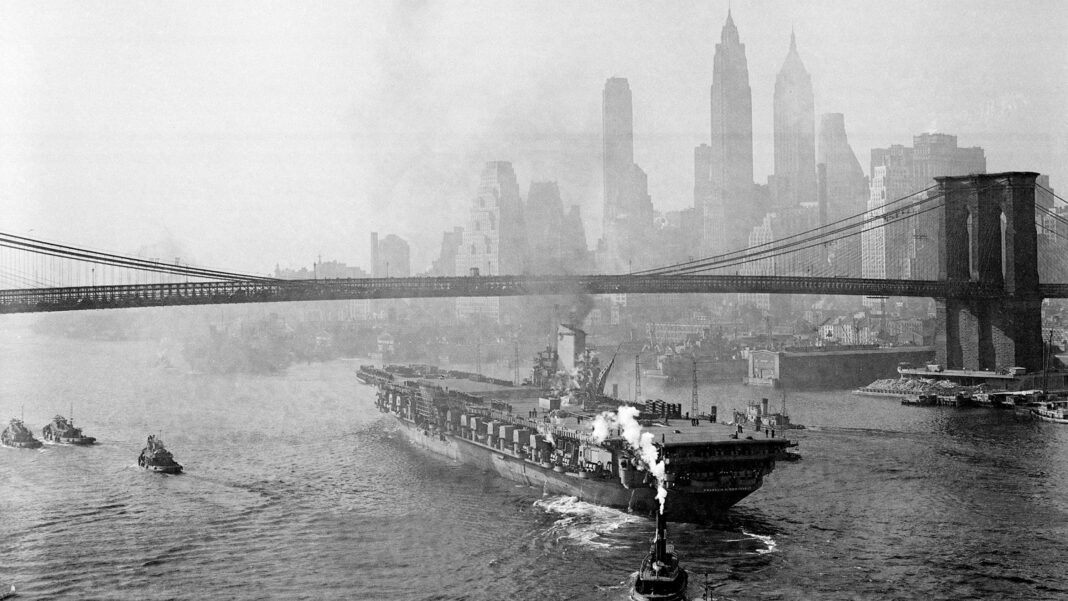

The largest military conflict in human history began on September 1, 1939. The Second World War involved 61 nations, representing 80% of the world’s population, with combat taking place on the territory of 40 of these countries. It is estimated that 60 million people lost their lives as a result of the conflict. The Soviet Union suffered particularly devastating losses, with fierce fighting taking place on its soil. Nearly half of those who perished were citizens of the Soviet Union. The United States played a crucial role in defeating Hitler and his allies. New York City was far from standing on the sidelines. The war transformed it into the center of the American home front. For more details, check out queensyes.com.
Briefly about the war
World War II lasted from September 1, 1939, to September 2, 1945. The conflict was initiated by Germany under Hitler, who launched an invasion of Poland. Joseph Stalin, the leader of the USSR, also played a role in the early stages of the war by signing a non-aggression agreement with Germany, known as the Molotov-Ribbentrop Pact. Hitler determined the date and time of the attack on Poland even before signing the document as he was well aware of the impending conflict.
The war was mainly caused by the terms of the Versailles Peace Treaty of 1919, which was hard for Germany to accept. Also, the actions of major powers, the global economic crisis and the desire of influential figures in Germany, Italy and Japan to reshape the global landscape contributed to the conflict.
The USSR, Italy and Japan, along with their respective satellites and allies, fought on the side of Germany. The anti-Hitler coalition was spearheaded by the United States, Great Britain and China. For nearly the first two years of the conflict, Stalin pursued an assertive foreign policy, engaging in military action against Finland and occupying Lithuania, Latvia, Estonia, Romania, Bessarabia and Northern Bukovina. Displeased with this territorial expansion, Hitler launched an invasion of the Soviet Union in 1941, breaching the terms of the non-aggression treaty. The USSR’s disregard for international agreements and conventions, coupled with the brutal actions of the Nazis, resulted in a staggering loss of life.
In 1945, Soviet troops engaged in combat operations in Slovakia, Hungary and Poland advanced into German territory. At the same time, British and American troops, aided by local partisans, successfully cleared Italy of Fascists and Hitler’s troops. By April and May, the Red Army had effectively defeated the remaining German forces. Germany officially surrendered on May 8, 1945. Japan also surrendered after the United States dropped atomic bombs on the cities of Hiroshima and Nagasaki.
The United States’ involvement in the war
As Nazi Germany started taking over Europe, the United States found itself unprepared for conflict. The military was limited in size and poorly supplied. However, Japan’s attack on Pearl Harbor in December 1941 forced the nation to enter World War II officially. By attacking the United States’ largest naval base in the Pacific, Japan sought to disable the United States Navy and secure its own operational freedom.
Franklin D. Roosevelt, then president of the United States, persuaded manufacturing executives to repurpose their factories for military use. He also ensured they had straightforward access to the necessary raw materials.
The Americans engaged in combat operations in France, Italy, Tunisia, Algeria, Morocco, Germany, the Netherlands, Belgium and Luxembourg. They also deployed troops in the Pacific and Southeast Asia. In all, the United States suffered over 400,000 military losses during the war.
New York City’s participation in the war
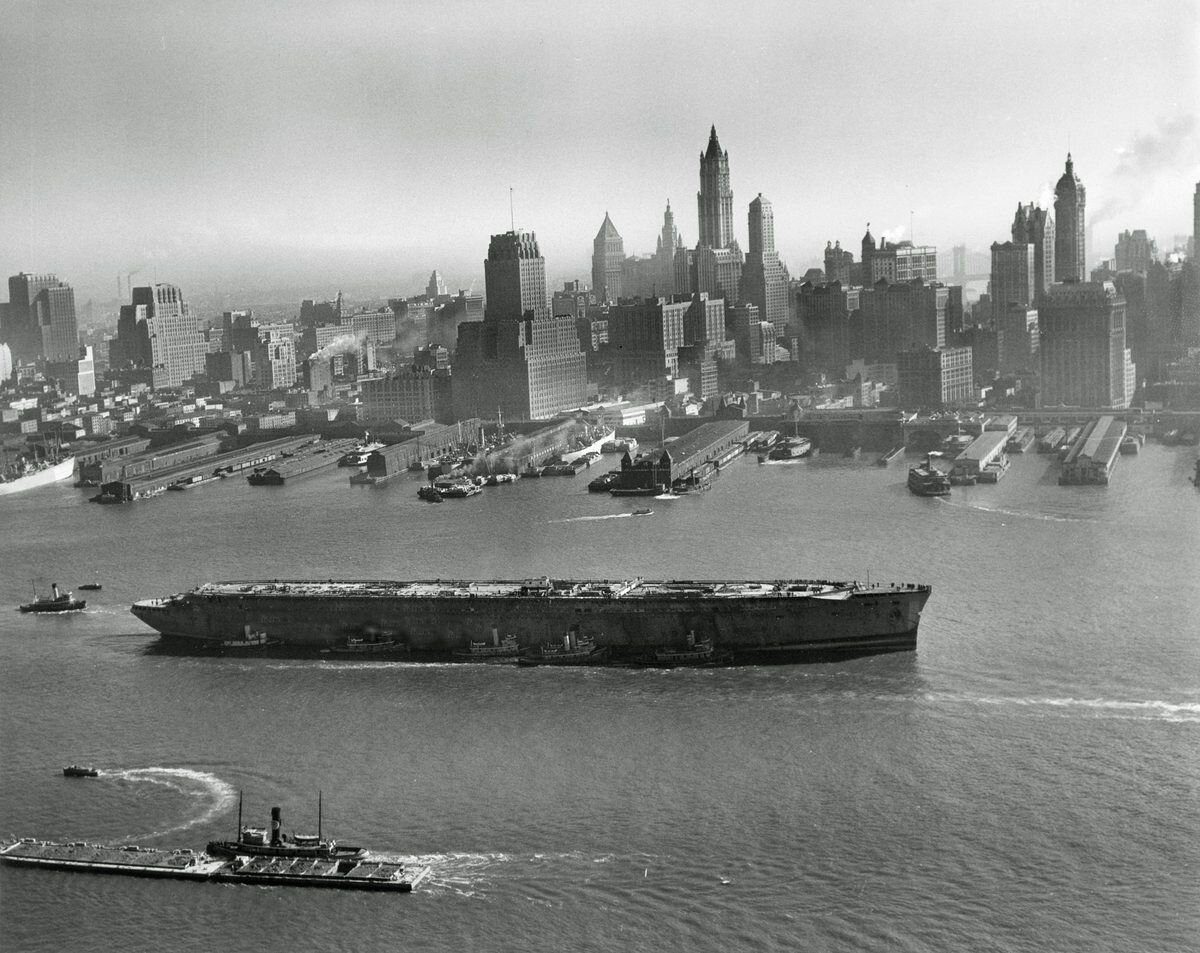
After the United States entered the war, within a short time, New York City, with its 7 million residents, was fully immersed in supporting the war effort. The recruits underwent training at military bases within and around the city. The city’s extensive port emerged as the primary departure point for troops and supplies heading overseas. Over 900,000 New Yorkers were directly engaged in the war effort, with an estimated 63 million tons of munitions shipped from its harbor. At the height of the war, the port averaged one departure every 15 minutes.
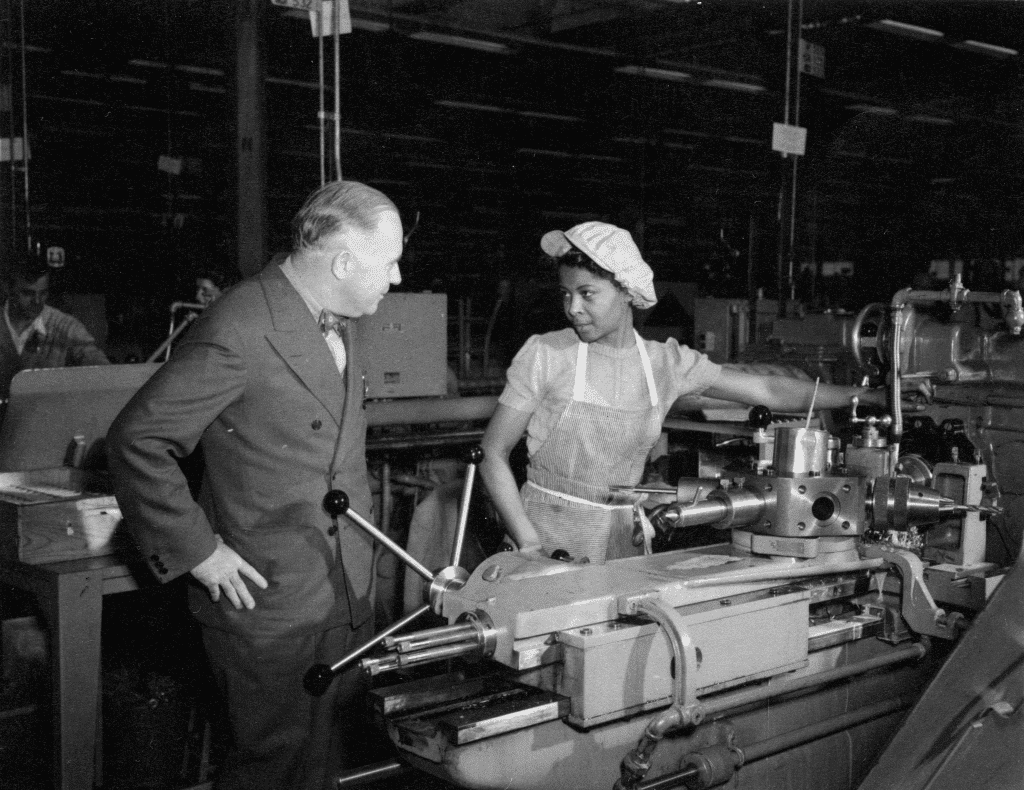
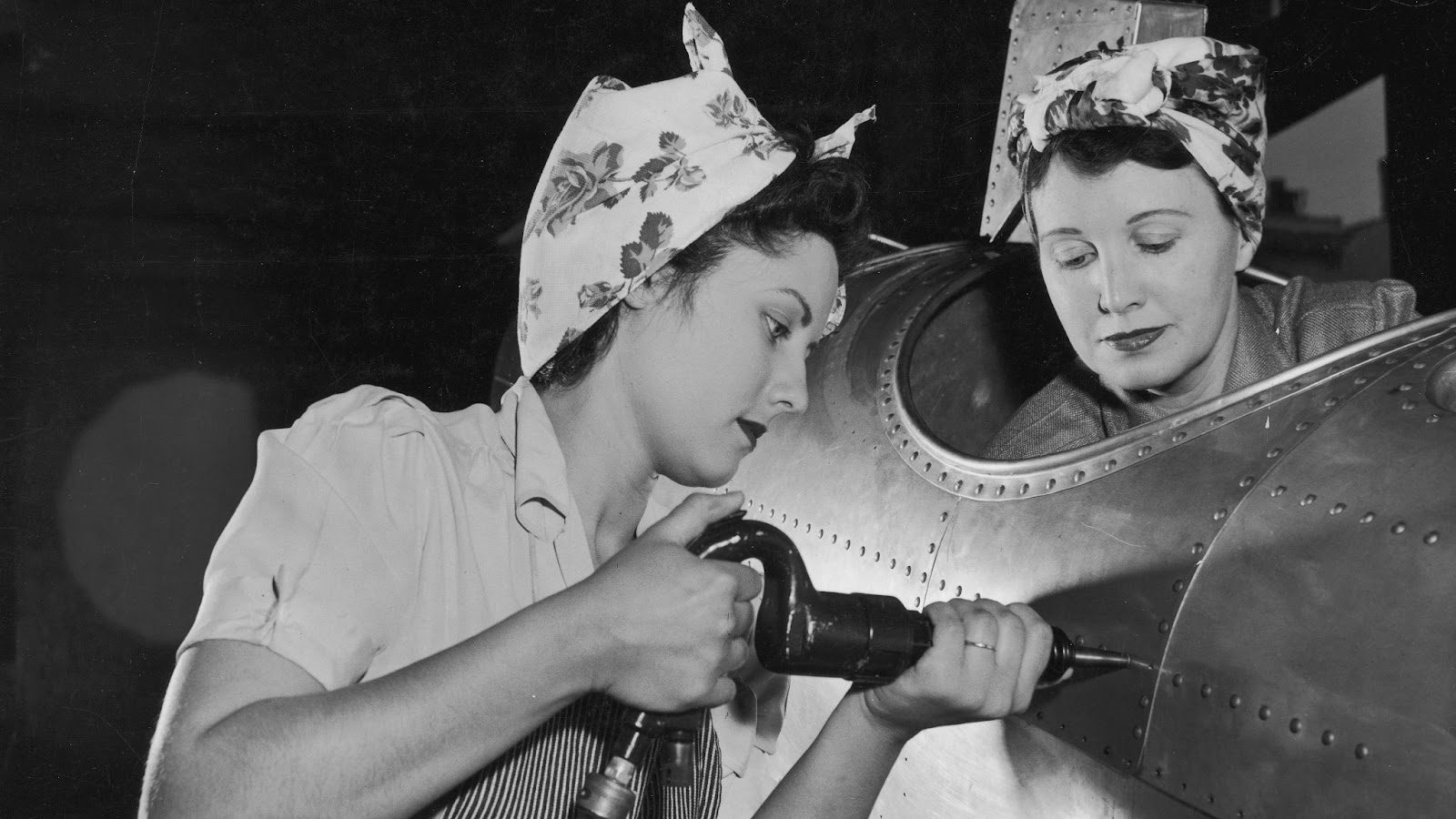
Despite having 27,000 factories, New York received only limited orders to produce the equipment and materials needed by the troops at the beginning of the conflict. It resulted in unemployment until the government took action in 1942 to address the situation. As orders increased, took over the jobs of men who had gone to the front lines. They were required to work overtime, particularly in New York City, where they manufactured airplane parts, metal products, glass fibers, optical lenses, tarps, backpacks and more.
The Steinway Piano Company, located in Queens, manufactured glider wings, while Pfizer established the first plant in Brooklyn for producing the antibiotic penicillin. The Norden Company, based in Manhattan, developed a highly precise bombsight. Numerous garment industry shops were busy cutting and sewing uniforms for soldiers. Additionally, volunteers played a significant role in support efforts, such as rolling bandages in the New-York Historical Society’s halls.
The Brooklyn Navy Yard became the leading producer of battleships. These were large armored warships with a main battery of large-caliber artillery. A workforce of 75,000 operated around the clock to build battleships such as the USS Iowa and USS North Carolina, as well as aircraft carriers and ships that carried tanks. New York’s shipyards produced more products than all the states combined. By the end of hostilities, the United States Navy outnumbered the fleets of every other nation in the world.
Daily life on the home front
Daily life for New Yorkers changed dramatically with the entry into the war. Both the residents and authorities feared that the coastal city, the nation’s most populous and its financial center, would become a target for air and naval strikes. In fact, in the first four months, the Germans sank 87 supply ships in the Atlantic Ocean. To protect the metropolis, Mayor Fiorello La Guardia implemented blackout measures to ensure that the New York skyline remained hidden from enemy view at night.
The supply of food and goods was significantly limited. With the military requiring substantial amounts, the monthly ration cards issued on the home front specified the quantities of oil, sugar, meat, canned goods, gasoline, fuel oil, firewood, clothing and shoes that people were allowed to buy. Some things became generally unavailable during wartime, such as constructing new facilities and manufacturing cars, vacuum cleaners and kitchen appliances.
Women faced challenges due to the new societal expectations. It affected not only single women but also married ones and mothers were also expected to join the workforce. Many women were compelled to work whether out of financial necessity or a sense of patriotism. Those who didn’t work were often seen as unpatriotic idlers.
The city worked practically without respite. When New Yorkers took a break for entertainment, it typically involved going to the movies. During that time, local filmmakers created films that showed the bravery of soldiers to lift spirits. Art, advertising and the media played a pivotal role in the war effort, with patriotism being celebrated from every angle.
Even at home, citizens could play a part in winning the war by recycling items like rubber, tin, kitchen grease, paper, lumber and steel. These materials were crucial for the war effort, with kitchen grease being used to make explosives, for instance.