
Historians estimate that at the height of the Vietnam War, over half a million American soldiers and officers were deployed in Vietnam. In total, over 58,000 Americans lost their lives or went missing as a result of the conflict. The effort to fight a war on the other side of the globe to protect the world from the spread of communism is indeed a monumental undertaking. Among the heroes were quite a few Queens residents. The Borough of Queens, specifically Elmhurst Park, features the Memorial honoring 371 servicemen from Queens. Some of them were killed in action, while some remain missing. For more details about the war and the Memorial, check out queensyes.com.
One of the longest wars for the United States
The Vietnam War lasted from 1955 to 1975. It was one of the longest wars in the history of the United States. The conflict originated in the 1940s between communist and French colonial forces. In 1954, France partitioned Vietnam, which had been its colony before and during World War II. The communists, led by the revolutionary Ho Chi Minh in the North, emerged victorious against the French. As a result of the Geneva Accords, Vietnam was divided into a communist North and a pro-American South.
In 1955, the United States persuaded South Vietnam not to comply with the terms of the signed agreements to prevent the spread of communism in the region. This action resulted in a military confrontation between the North and South of Vietnam. The North received backing from the USSR and the People’s Republic of China, while the South was supported by the United States, Australia, New Zealand, South Korea and others.
American governors deployed military forces to Asia due to concerns about the rapid spread of communist ideology. They believed that if communism were to gain ground in one country, it would likely do so in others. Despite the United States having the most developed economy and powerful military since World War II, it was communist North Vietnam that ultimately emerged victorious.
Key factors contributing to the United States defeat
- Insufficient financial backing from Congress. In total, the United States spent over 600,000 billion dollars on the war effort. At the beginning of the war, Americans were feeling pretty optimistic. Until 1968, the government was confident that victory was attainable. Over time, though, that confidence started to wane, especially after the large-scale communist offensive in January 1968. When Congress ceased financial support for the war effort, it finally nullified all American efforts and compelled the withdrawal of combat troops.
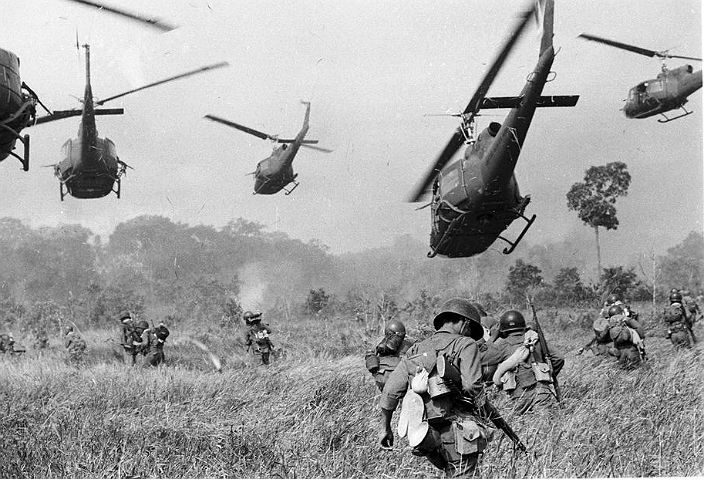
- Combat in a hellish jungle. Even the most resilient warriors struggled to endure the harsh conditions of their combat environment. The Vietnamese were intimately familiar with their land, which mostly consisted of impenetrable jungles. They often initiated the fighting, picking their time and location. While Vietnamese troops could easily retreat to safe havens across the border with the countries of Laos and Cambodia, these areas were off-limits to Americans.
- Anti-war protests. The Vietnam War is often referred to as the ‘first televised war’ due to the extensive media coverage it received. With most American households owning TVs, people were able to watch all the events, which, moreover, were shown almost uncensored. Reports from journalists highlighted the rising civilian casualties, mutilations, and instances of torture since 1968. It surged anti-war protests across various regions in the United States. In May 1970, the National Guard shot and killed four students at Ohio State during a protest. The incident served to reinforce anti-war sentiments among the general public. The photographs of coffins bearing the names of young soldiers just added to the unrest. If Vietnam could shape public opinion through propaganda as directed by communist principles, it wouldn’t be effective in the democratic United States. Unlike their adversary, Americans could not simply close their borders and entirely stifle opposition by imprisoning those who were aware and outspoken.
- Brutal warfare tactics. To prevail in such a complicated conflict, the Americans resorted to devastating weapons. For instance, they deployed chemicals to combat foliage in the jungle and used a petrochemical to incinerate living Vietnamese. The Vietnamese people were forced to hide in shelters for weeks on end, only to emerge and find themselves struck by trees devoid of foliage. Furthermore, Americans had their reputation tarnished by the My Lai Massacre in 1968. American soldiers killed over 500 Vietnamese villagers, among them women and children. As a result, the Americans lost support from the civilized world, particularly from those Vietnamese who initially backed the United States against the communists.
- Diminished morale. Given the results of interrogations of the Communist prisoners, they were far more motivated than the Americans. The patriotic Asians were convinced that they were fighting for a crucial cause—the unification of their nation under one government. Their strong morale was also evidenced by the ability of the Vietnamese to continue fighting despite tremendous losses. The Americans, on the other hand, were not defending their homeland or their people, which resulted in a lack of motivation.
- Unpopularity and corruption of the South Vietnam government. Unlike the communist North, the pro-American South lacked significant support from the Vietnamese people. It was primarily American forces, rather than Vietnamese ones, who fought for liberation from the communists, underscoring the lack of local support for the South Vietnamese regime. Furthermore, the global perception of South Vietnam was still linked to its history as a French colony. It created a challenging environment for defeating communist forces. The situation was further complicated by the prevalence of corruption. Significant financial support from the United States to a government already plagued by corruption only deepened the economic troubles in South Vietnam. As a result, the reliability of the South Vietnamese military was questionable for the United States.
Veterans Memorial
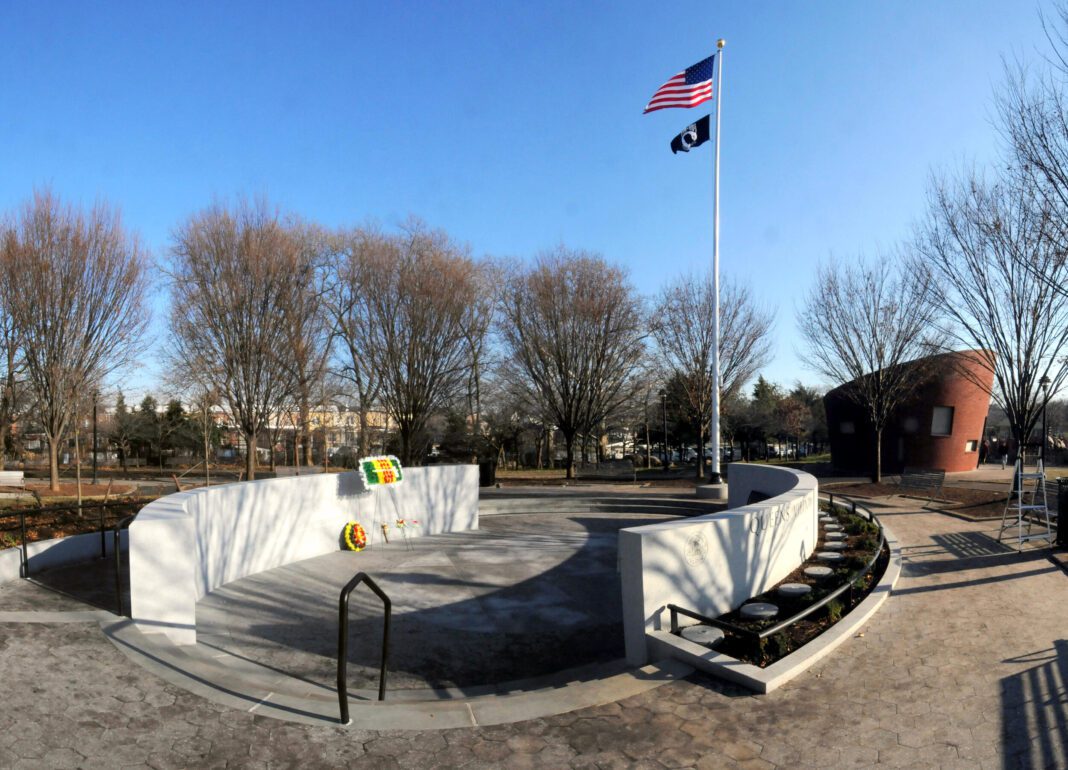
The Queens Vietnam Veterans Memorial in Elmhurst Park was officially unveiled in December 2019. The Memorial features a slightly recessed elliptical area framed by two gray granite walls. One of the walls displays the names of 371 Queens residents who lost their lives or were listed as missing in action during the Vietnam War. Additionally, the monument includes a timeline of the war, highlighting key events and their significance.
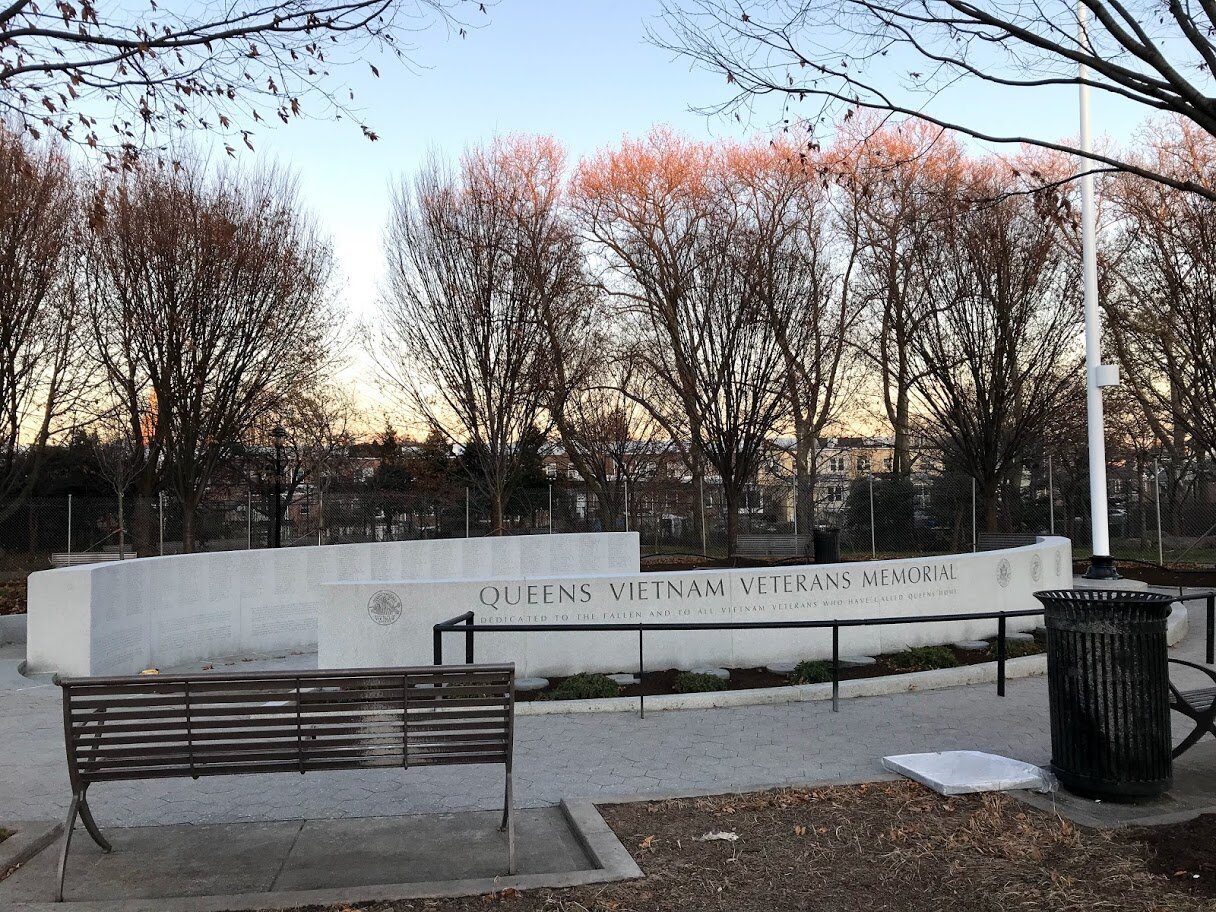
The back side is adorned with a bamboo pattern. Visitors to the Memorial can sit on the bench and view the names while absorbing the historical context. Additionally, the Memorial displays its name, a tribute to all veterans, the Vietnam Service Medal and some military insignia. At the heart of the elliptical area lies a granite map depicting Vietnam and other significant historical sites. The surrounding greenery adorns the area with green, yellow and red colors throughout the seasons.
This is the first Memorial in Queens dedicated to all Borough residents who participated in the Vietnam War. The Memorial was initiated by Melinda Katz, who was the Queens Borough President at that time. Together with the New York City Parks Department, local veterans, various officials, and community leaders, she helped to lay the cornerstone.
Act of vandalism
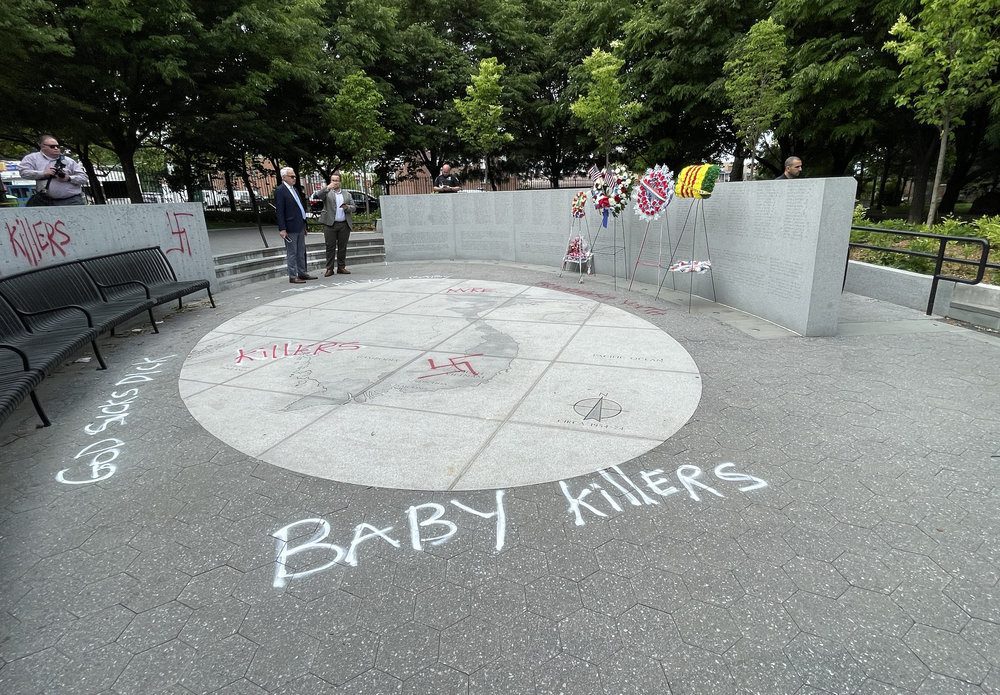
In June 2021, the Queens Vietnam Veterans Memorial was vandalized by unidentified individuals. They spray-painted derogatory messages about God, “fallen souls,” and “baby killers.” Additionally, the vandals added a swastika over the number 110, likely referencing the 110th Police Precinct.