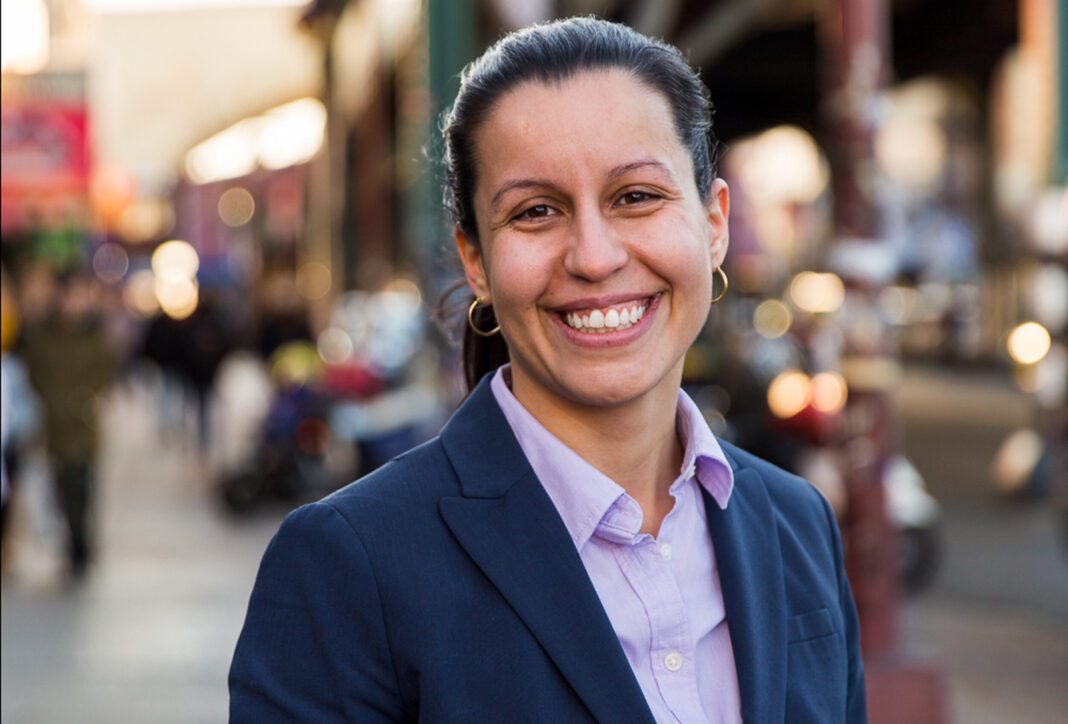

In 2021, Tiffany Cabán began representing New York City Council’s 22nd District, covering a significant portion of Queens. A former attorney, she has made substantial efforts to reform the American justice system. Cabán is known as a defender of the rights of Black communities, immigrants, low-income individuals, the LGBTQ+ community, and other vulnerable members of society. Read more about this determined and uncompromising city official on queensyes.com.
Education
Tiffany Cabán was born on July 24, 1987, in Queens to Puerto Rican parents. She earned her Bachelor of Arts degree from Pennsylvania State University, where she studied crime, law, and justice. Additionally, Cabán obtained a Juris Doctor from the New York Law School. It was during this time that she realized her commitment to serving her community.
Career
After completing her education, Cabán worked with the New York County Defender Services and the Legal Aid Society. She served as a public defender, representing individuals who lacked the resources to fight against a harsh system of mass incarceration. Cabán aided over a thousand low-income clients in avoiding judicial injustice. Her advocacy experience revealed some of the worst flaws in the American criminal justice system.
Driven to change the city’s approach to health and public safety, Cabán ran for Queens District Attorney in 2019. She focused her efforts on criminal justice reform, fighting to end mass incarceration and advocating for drug policy reform. Cabán also supported decriminalizing sex work. Despite backing from The New York Times and progressive politicians, she narrowly lost the election to Melinda Katz.
Following the election, she joined the Working Families Party as a national political organizer. In December 2021, Tiffany Cabán began representing New York City’s 22nd District, which includes much of Queens. She received support from the Democratic Socialists of America for her campaign.
Accomplishments in Office
While serving on the City Council, Cabán has initiated and passed legislation supporting abortion rights, homeless residents, and survivors of gender-based violence. Other key priorities include:
- Transforming the criminal justice system and ending police control and mass incarceration, which disproportionately harm Black, low-income, and immigrant communities. Cabán advocates for dismantling New York’s oppressive prison system, permanently closing the Rikers Island prison complex, and halting new prison construction. She believes that, instead of the NYPD, a community-led public safety infrastructure should be established.
- Expanding opportunities for small businesses, eliminating restrictions on permits for street vendors, and enabling the use of open streets and city spaces for commercial purposes.
- Supporting diversity and fighting discrimination.
- Preserving existing affordable public and social housing, as well as constructing new social housing.
- Transferring control of the subway system to the city.
- Building an economy in which the most vulnerable groups have access to resources for prosperity, fair wages, and enhanced protections.
- Ensuring universal access to affordable, quality childcare and elder care.
- Establishing paid family leave for independent contractors and gig workers.
- Creating a citywide model of portable benefits to offer social benefits to workers regardless of employment status.
- Replacing fossil fuel-based infrastructure with renewable energy sources, such as solar or wind.
- Ensuring improved health outcomes for low-wage workers and communities of color by providing green energy jobs, fighting for public power, investing in urban agriculture, and more.
- Reclaiming streets for pedestrians and cyclists by investing in public spaces and greenery, as well as building protected bike lanes and bus lanes.
- Strengthening the city’s shoreline resilience to prevent disasters like those experienced during Hurricane Sandy.
- Rethinking local governance with a proactive organizational structure based on collaborative project design and co-management.
- Involving working groups, resident councils, and more in the city’s decision-making processes to enhance understanding of local governance and foster effective communication between various city agencies.